You stand over your seed tray, watering can poised, the tiny green heads of your seedlings looking impossibly delicate. Do you pour from above, risking a fungal disaster? Or do you set the tray in a dish of water and hope it soaks up enough? This moment of hesitation is a rite of passage for every gardener starting seeds. The debate between bottom watering vs top watering seedlings isn’t about finding one “right” answer, but about understanding two different tools for your gardening kit. Each method shapes your seedlings’ environment in distinct ways, influencing root health, disease risk, and even your own routine. Let’s clear the fog so you can water with confidence, choosing the right path for your plants’ specific needs.
The best way to water seedlings depends on your goals and setup. Bottom watering, where water is absorbed from a tray below, is ideal for promoting deep roots and preventing fungal diseases on delicate leaves. Top watering, pouring water gently onto the soil surface, is better for flushing salts, ensuring even moisture in large trays, and is simpler for beginners. Choose bottom watering for fragile seedlings and top watering for quick, even saturation.
What Bottom Watering Does (And Why It Works)
Bottom watering, or watering from below, is a technique where you place your seed trays or pots into a shallow reservoir of water. Instead of pouring water onto the soil surface, you let the dry soil pull moisture up through the drainage holes via capillary action. You’ll know it’s working when you see the top of the soil darken with moisture, usually within 10 to 30 minutes.
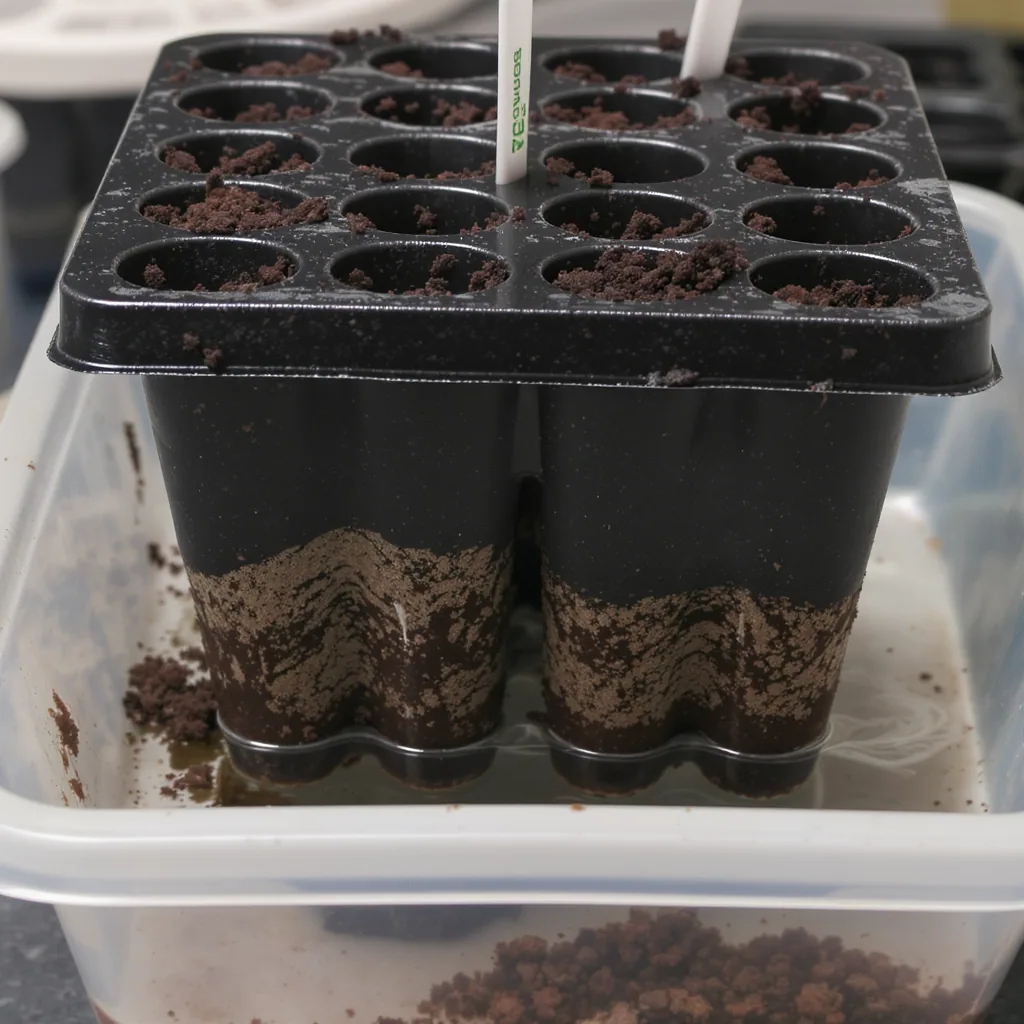
This seedling watering method offers several key benefits. First, it encourages roots to grow downward, seeking the water source, which builds a stronger, more resilient root system. Second, it keeps the soil surface and the delicate stems and leaves of your seedlings dry. This is crucial for preventing fungal diseases like damping-off, a common killer of young plants. Finally, it promotes even moisture uptake, reducing the chance of dry pockets in your seed trays that can stunt growth.
The Case for Top Watering: Simplicity and Control
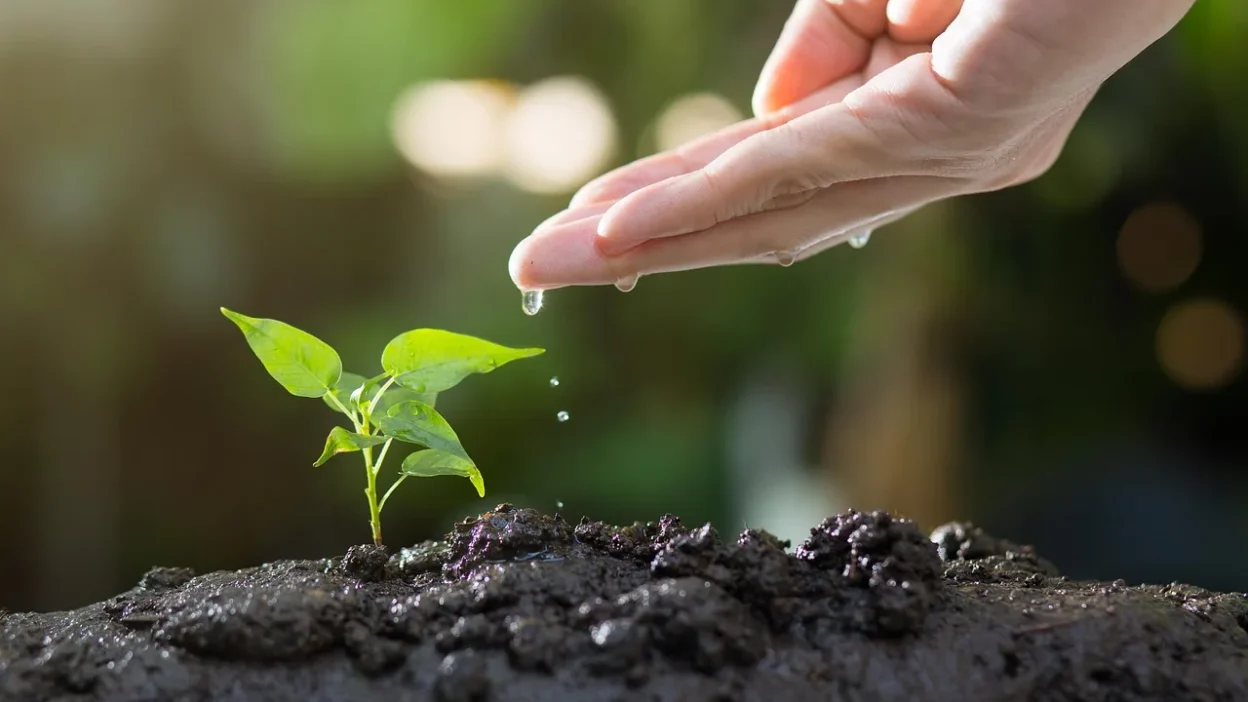
Top watering is the classic approach: you gently pour or spray water directly onto the soil surface from above. For many gardeners, especially beginners, it’s the most intuitive of all seedling watering techniques. Using a watering can with a fine rose attachment or a gentle spray bottle gives you immediate control over where the water goes.
The main advantage is speed and simplicity. You can quickly assess if the entire soil column is moist, which is particularly helpful for larger or deeper containers. Top watering is also the best way to flush out excess mineral salts that can accumulate from fertilizers and tap water, preventing toxic buildup around tender roots. The primary risk is getting the foliage wet, which can promote disease if leaves stay damp for too long in a cool, low-airflow environment. But with a careful hand, this risk is easily managed.
Side-by-Side: Bottom vs Top Watering for Seedlings
Choosing between these two paths is easier when you see them compared directly. The table below breaks down the core differences to help you scan and decide which method fits your current needs for watering seed trays.
| Factor | Bottom Watering | Top Watering |
|---|---|---|
| Best For | Fragile seedlings, disease prevention, promoting deep roots. | Quick saturation, flushing salts, beginners, larger containers. |
| Key Benefit | Keeps foliage dry; encourages strong downward root growth. | Fast, simple, and effective at wetting the entire root zone. |
| Main Drawback | Can be slower; may not work if soil is severely compacted. | Risk of wetting leaves, which can spread disease. |
| Ideal Seedling Stage | Excellent for newly sprouted, delicate seedlings. | Great for established seedlings and larger plants. |
| Effort Level | Medium (requires a tray and monitoring time). | Low (direct and immediate). |
Your Decision Guide: When to Choose Which Path
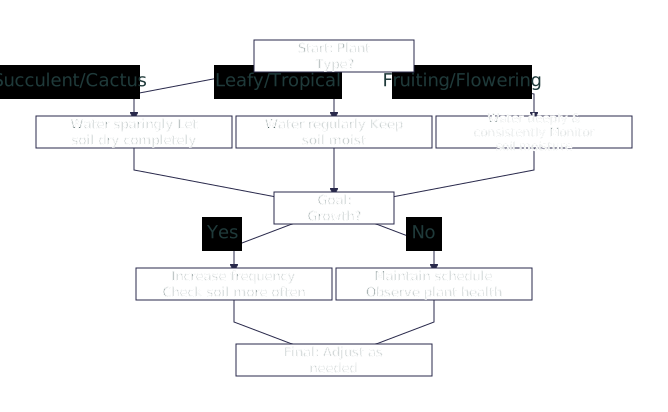
So, when should you use bottom watering versus top watering? Think of it as selecting the right tool from your gardening kit. Your choice depends on your seedlings’ needs, your environment, and your own routine. Here’s a straightforward guide to help you pick your path.
Choose Bottom Watering If…
You are starting seeds that are notoriously prone to damping-off (like tomatoes or basil). Your seedlings are very young and delicate. You’re growing in a humid environment with poor air circulation. Your primary goal is to build a deep, robust root system. You don’t mind the extra few minutes it takes for the soil to wick up moisture.
Choose Top Watering If…
You need to water quickly and evenly. You’re a beginner and want the simplest method. You notice a white crust (mineral salts) on your soil surface and need to flush it out. Your seedlings are more established and sturdier. You’re using large, deep pots where ensuring even moisture from the top down is more reliable.
The most skilled gardeners often use a combination, switching methods as their plants grow and conditions change. The key is to observe your plants and adapt.
The Right Tool for the Right Seedling
The debate between bottom watering and top watering isn’t about finding a single winner. It’s about understanding the tradeoff. Bottom watering is your precision tool for fostering root health and protecting fragile starts. Top watering is your efficient, all-purpose tool for maintenance and quick hydration.
By matching the method to the situation—considering your plant type, its stage, and your environment—you move from following a rigid rule to applying skilled judgment. Keep watching your seedlings; they’ll tell you if your choice is working by the strength of their growth. Don’t be afraid to use both techniques throughout your gardening journey.
A related guide is Best Way to Thin Seedlings (by Container Type).