Imagine your garden as a living library, where each prized plant is a master volume filled with genetic information. Division and offset propagation methods are your permission to check out perfect copies, leveraging nature’s own built-in system for rapid, cost-free multiplication. Unlike growing from seed, which can be slow and genetically unpredictable, these vegetative propagation techniques allow you to clone your healthiest specimens, preserving their exact traits and accelerating your garden’s expansion exponentially. This guide will demystify the process, moving from the core botanical science that makes it so reliable to the hands-on, step-by-step protocols you can use to become a proficient plant multiplier. You’ll learn to identify the ideal candidates, execute the separation with confidence, and nurture your new clones to vigorous independence, turning a single purchase into a thriving collection.
Division and offset propagation are the fastest, most reliable ways to multiply plants, creating genetically identical clones by physically separating mature clumps or harvesting naturally produced plantlets. These methods are reliable because they work with the plant’s innate biology, not against it. You’re essentially helping the plant do what it’s already programmed to do, which guarantees success and allows for rapid garden expansion with zero cost.
The Botanical Blueprint: Why Division and Offsets Work
At its core, plant division propagation and the harvesting of offsets are forms of asexual plant reproduction. Unlike growing from seed, which mixes genetic material, these vegetative propagation techniques create perfect genetic clones of the parent plant. This isn’t a trick we’re imposing on the plant; we’re simply harnessing its innate survival and expansion mechanisms.
The magic happens in meristematic tissue—regions of undifferentiated cells that can become any plant part. When you divide a clump or separate an offset, you’re creating new wounds near these growth centers. The plant responds by redirecting hormones: auxins to stimulate new root growth and cytokinins to prompt new shoots. It’s a beautifully orchestrated repair-and-regrow process. For a deeper dive into plant meristems, resources like the Encyclopædia Britannica provide excellent scientific overviews.
This biological reality is why these methods are so reliable. You’re not forcing the plant to do something unnatural; you’re giving its existing growth patterns a strategic nudge, resulting in a new, independent plant with a head start.
Your Propagation Toolkit: What You Really Need
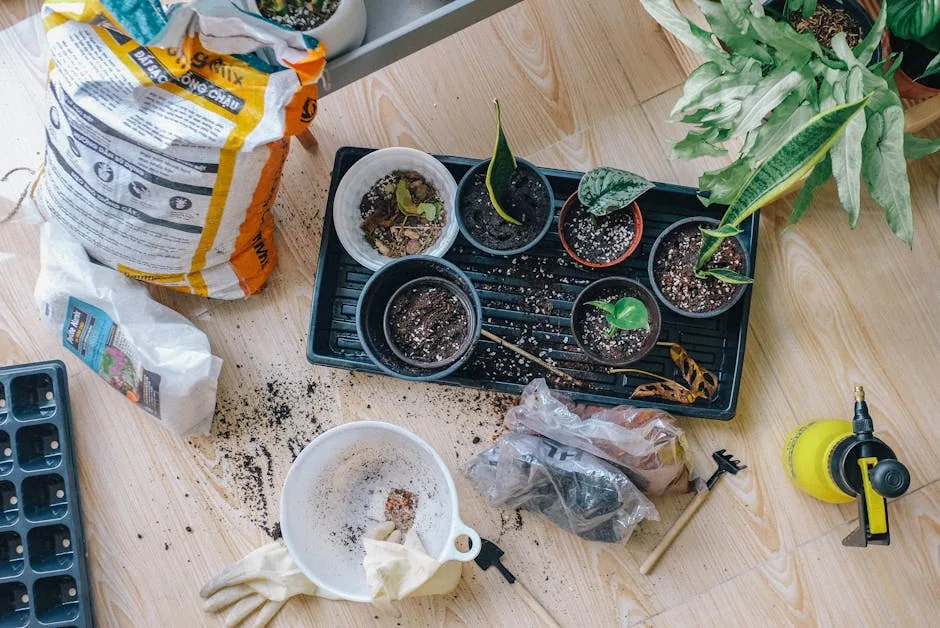
Photo by Huy Phan on Pexels
Success in propagating offsets and pups often comes down to preparation. While you can manage with just a sharp knife, the right tools make the process cleaner, safer, and more successful. Hygiene is non-negotiable—dirty tools are the fastest way to introduce rot or disease to fresh wounds.
The Pro Propagator’s Core Kit
Beyond a trowel and pots, these five items are essential for serious multiplication:
- Bypass Pruners & a Serrated Knife: Pruners for clean cuts on smaller stems and roots; a sturdy, serrated knife (an old bread knife works perfectly) for sawing through tough, matted root balls.
- Rubbing Alcohol & a Rag: For sterilizing blade surfaces between cuts, especially when moving between different plants.
- A Root-Washing Setup: A bucket or hose to gently wash soil from roots. This lets you see the plant’s structure clearly, making for smarter, cleaner divisions.
- Pre-Moistened Potting Mix: Have your medium ready. A well-draining mix (often a blend of potting soil, perlite, and coarse sand) is critical. Moisten it thoroughly before planting so it’s uniformly damp, not soggy.
- Labels & a Marker: It’s easy to forget what a division is or when you did it. Labeling is a small habit that pays off hugely.
The Universal Division Protocol: A Step-by-Step Master Guide
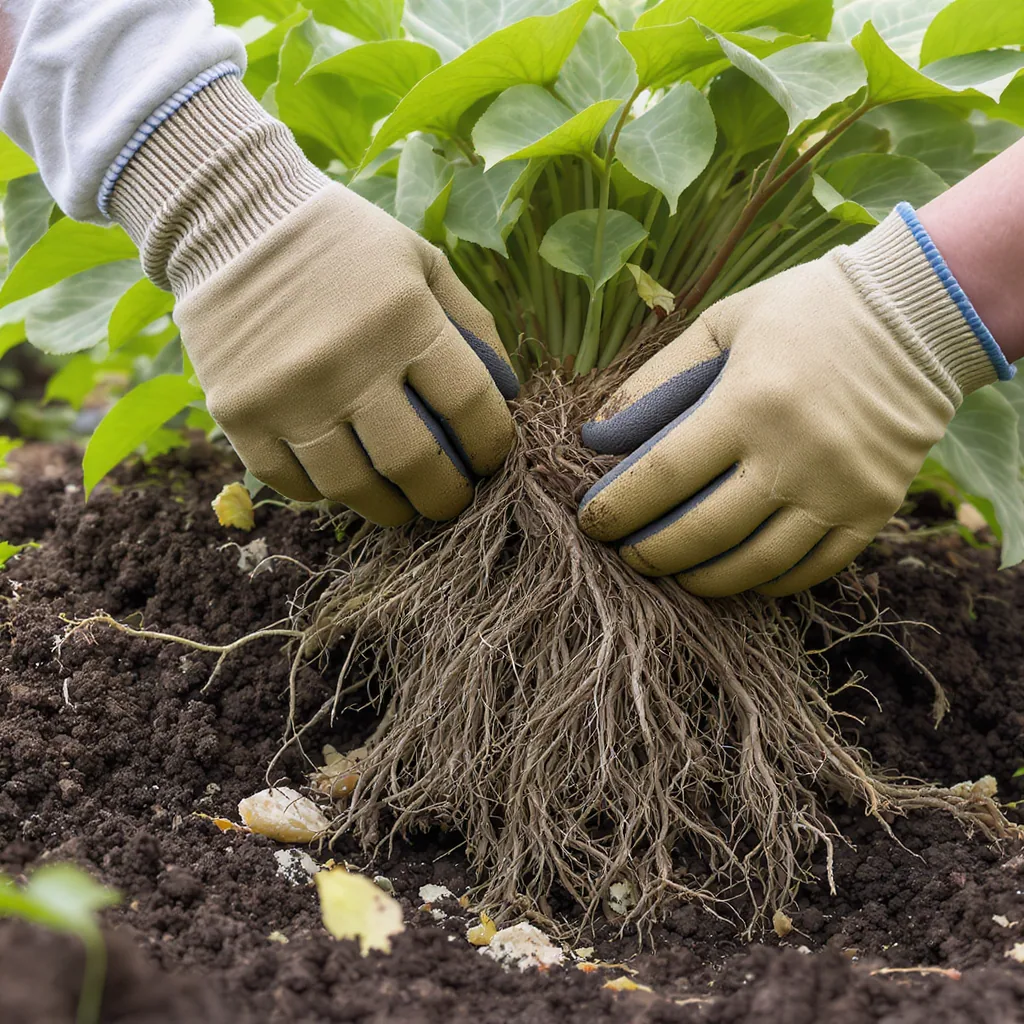
This is your master blueprint for cloning plants by division. While timing varies by plant (generally early spring or fall for most perennials), the core process remains the same.
Phase 1: Preparation
1. Hydrate the Plant: Water the plant deeply 24 hours before you plan to divide. This reduces transplant shock and makes the roots more flexible.
2. Prepare Your Workspace & Tools: Gather all tools from your kit. Sterilize cutting blades with rubbing alcohol. Have pots, labels, and pre-moistened potting mix ready.
3. Dig and Lift: Use a shovel to dig a wide circle around the plant, preserving as much of the root ball as possible. Gently lift the entire clump from the ground.
Phase 2: The Act of Division
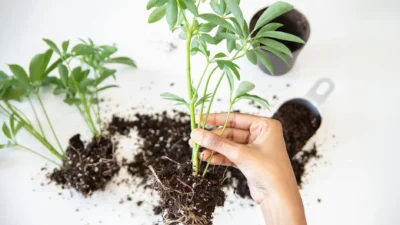
4. Expose the Structure: Gently wash or tease away excess soil from the roots to reveal the crown and root architecture.
5. Locate Natural Split Points: Look for obvious gaps, separate stems (or “fans”), or individual growth points. Your goal is to divide along these natural fault lines.
6. Make the Separation: For loose clumps, you can often pull sections apart by hand. For dense, matted roots, use your knife or two garden forks placed back-to-back in the center to lever it apart. Ensure each new division has a healthy section of roots and at least 3-5 growing points (shoots or “eyes”).
7. Trim and Tidy: Use clean pruners to trim away any dead, damaged, or excessively long roots. You can also reduce the top growth by about one-third to balance the loss of roots and minimize water stress.
Phase 3: Immediate Aftercare
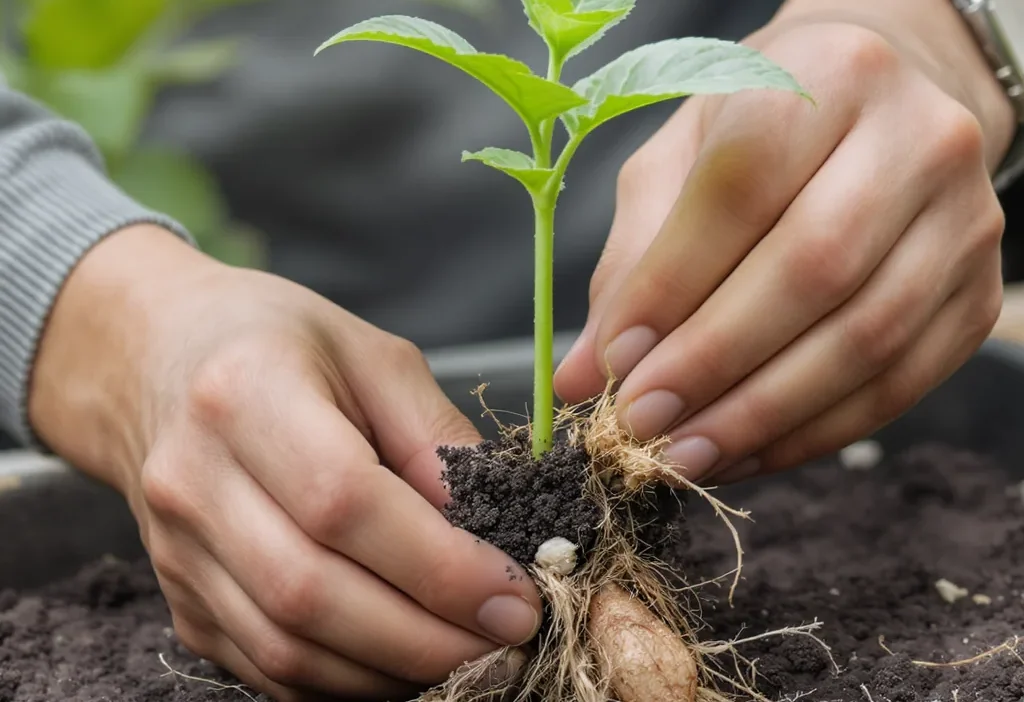
8. Pot or Plant Promptly: Place each division in its new container or planting hole. The crown (where roots meet shoots) should be at the same soil level as before.
9. Water Gently but Thoroughly: Settle the soil and eliminate air pockets with a gentle, deep watering.
10. Label and Relocate: Label with the plant name and date. Move the new divisions to a protected, bright but shaded location for recovery.
Offset Odyssey: Harvesting Pups, Runners, and Suckers
While division involves splitting a whole plant, offset propagation focuses on harvesting the independent plantlets many species produce naturally. These go by many names—pups, suckers, runners—but the principle is the same: detach a self-contained mini-plant that’s already formed its own roots.
Types of Offsets:
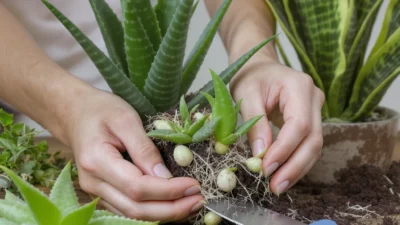
- Pups: Produced by succulents like agave, aloe, and bromeliads. They form at the base of the mother plant.
- Stolons/Runners: Horizontal stems that run along the soil surface (e.g., strawberry, spider plant) and root at nodes to form new plants.
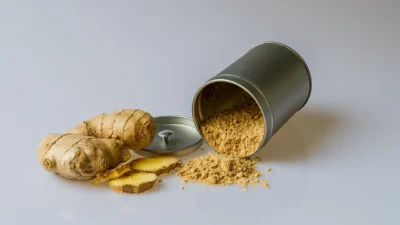
- Rhizomes: Horizontal underground stems (e.g., iris, ginger, bearded iris) that store energy and send up new shoots. Rhizome and stolon division is a key technique here.
- Suckers: Vigorous shoots that arise from the root system of trees or shrubs (e.g., raspberries, lilacs, some roses).
The technique is often simpler than full division. For a pup, you often find where it connects to the mother—a satisfying, clean ‘pop’ signals a good separation when using a sharp knife. For a spider plant runner, you can simply snip the stem connecting the rooted plantlet to the parent. The key is ensuring the offset has developed its own root system before separation; if not, you may need to root it first while still attached.
Decision Points: Choosing the Right Method for Your Plant
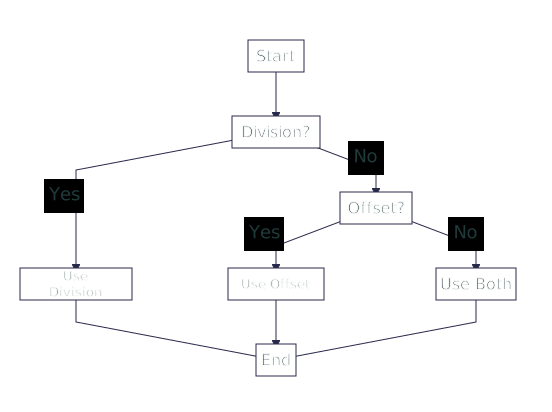
Choosing the right path is straightforward once you observe your plant’s growth habit. This simple diagnostic guide will point you toward the most effective technique for multiplying plants from offsets or division.
Start by asking: Does the plant grow as a single, tight clump that expands outward from a central crown? (Think hostas, daylilies, ornamental grasses). If yes, it’s a prime candidate for splitting perennial clumps via division.
If no, look for signs of natural plantlet production. Does it send out long stems with babies on the end (spider plants, strawberries)? Or produce smaller versions of itself at its base (hen-and-chicks, many succulents)? If yes, you’re in the realm of propagating offsets and pups.
A third category includes shrubs or trees that send up shoots from their roots (raspberries, sumac). These suckers can often be dug up and separated once they have their own roots. Remember, this is an educational guide; for valuable or fragile plants, consulting a local nursery professional is always wise.
The Critical First Weeks: Aftercare for Success
The work isn’t over once the plant is potted. Proper aftercare is what turns a stressed division into a thriving new plant. The golden rule: treat new divisions and offsets like convalescing patients, not established plants.
The Do’s
Provide Bright, Indirect Light: Avoid direct, hot sun which can scorch leaves and increase water loss. A spot with morning sun or dappled shade is ideal.
Keep Soil Consistently Moist: The goal is damp, like a wrung-out sponge, not wet. Check daily and water lightly when the top inch of soil feels dry.
Be Patient: It can take 2-6 weeks for a division to establish a robust new root system and show signs of top growth. Yellowing or losing a few older leaves is normal.
The Don’ts
Do Not Fertilize: Fresh roots are easily burned by fertilizer salts. Wait at least 4-6 weeks, until you see steady new growth, before applying a diluted, balanced feed.
Do Not Repot Again: Let the plant become slightly root-bound in its starter pot before moving it to a larger home. This encourages a strong, dense root ball.
Do Not Overwater: This is the most common killer. Soggy soil suffocates new roots and invites rot. When in doubt, err on the side of slightly dry.
Common Propagation Pitfalls and How to Avoid Them
Even with the best intentions, it’s easy to stumble. Recognizing these common mistakes will dramatically increase your success rate with propagating suckers and runners and divisions alike.
Dividing Too Small
Why It Happens: Enthusiasm to create as many plants as possible can lead to divisions with just one shoot and a few thread-like roots.
The Fix: Ensure each division is a robust, self-sustaining unit. A good rule is the “3-5 Rule”: at least 3-5 healthy shoots/growth points and a proportional mass of roots.
Using Dirty Tools
Why It Happens: It seems faster to just wipe the blade on your pants, but this transfers pathogens directly into open plant tissue.
The Fix: Make sterilization a non-negotiable ritual. Wipe blades with rubbing alcohol or a 10% bleach solution between every plant, or even between cuts on the same plant if you suspect disease.
Overpotting
Why It Happens: The instinct is to give the new plant “room to grow.”
The Fix: Plant the division in a container only 1-2 inches wider than its root mass. Excess soil stays wet too long, leading to root rot. A snug pot encourages healthy root development.
Immediate Full Sun
Why It Happens: Forgetting that the plant’s reduced root system can’t support full transpiration.
The Fix: Enforce a 2-3 week “recovery period” in a protected, shaded location before gradually reintroducing it to brighter light.
Beyond the Basics: Advanced Tips for Stubborn Plants
Once you’ve mastered the standard protocol, you can tackle more challenging specimens. Some plants require a slight twist on the fundamentals.
For extremely dense, woody-rooted perennials like mature ornamental grasses or peonies, a sharp spade or even a handsaw might be necessary. Soak the root ball overnight to soften it, then use the tool to literally chop it into manageable wedges, ensuring each has viable eyes. For plants with delicate, fleshy roots (like bleeding heart), handle the roots as little as possible and avoid washing them; instead, gently tease clumps apart.
While rooting hormone is rarely needed for divisions with existing roots, it can be useful for offsets that have few or no roots, or when dividing rhizomes (like bearded iris) where you make cuts through the fleshy storage stem. A light dusting on the cut surface can stimulate callusing and root initiation. The ultimate advanced tip? Keep a propagation journal. Note the plant, date, method, and outcome. This personal database becomes your most valuable tool.
Become a Plant Multiplier
Mastering division and offset propagation fundamentally changes your relationship with your garden. It transforms you from a consumer of plants into a creator and curator. You’re no longer just tending; you’re actively directing growth, filling spaces, and sharing abundance—all by leveraging the innate intelligence of the plants themselves.
The knowledge is now in your hands. The most powerful next step isn’t more reading; it’s action. This very week, walk through your garden or look at your houseplants. Identify one candidate—an overgrown hosta, a spider plant spilling over its pot, a succulent surrounded by pups. Gather your simple toolkit, revisit the universal protocol, and perform your first act of intentional multiplication. That’s how the living library expands, one perfect copy at a time.
Division and offset propagation are reliable, fast-track methods for creating new plants that are genetically identical to the parent. They work by harnessing the plant’s natural repair and growth mechanisms, specifically through meristematic tissue and hormonal responses. The two core techniques are: Division, for splitting dense perennial clumps, and Offset Propagation, for harvesting naturally formed plantlets like pups, runners, and suckers.
Success hinges on a few cardinal rules: use sterile tools, ensure each division has sufficient roots and shoots, plant in appropriately sized containers with well-draining soil, and provide a critical recovery period of bright, indirect light with consistent moisture (but never sogginess). Avoid fertilizing too soon and be patient—establishment takes weeks, not days. By choosing the right method for your plant’s growth habit and following these principles, you can confidently and cost-effectively expand your garden.
Q: Can you divide a plant at any time of year?
A: The ideal time is during the plant’s natural dormant period or just as it begins new growth. For most perennials, this is early spring or early fall. Dividing during the stress of summer heat or winter cold can significantly reduce success rates.
Q: What’s the difference between an offset and a sucker?
A: Both are types of natural plantlets. An “offset” is a general term for a young plant arising from the base of the parent (common in succulents). A “sucker” specifically refers to a shoot that grows from the rootstock of a tree or shrub, often some distance from the main trunk.
Q: How do I know if my plant is a good candidate for division?
A: Look for two key signs: 1) The plant has outgrown its space or developed a dead center (“donut hole”), indicating a crowded, mature clump. 2) It’s a perennial that naturally forms multiple stems or crowns from a central point, like hostas, daylilies, or ornamental grasses.
Q: Do I need rooting hormone for divisions or offsets?
A: Typically, no. Divisions with established roots and offsets that have already formed their own roots don’t require it. Rooting hormone can be helpful for offsets with minimal roots or when making cuts through thick rhizomes, as it may encourage faster root initiation.
Q: How long does it take for a new division to establish?
A: Most divisions will show signs of new top growth within 2 to 4 weeks if conditions are good. However, full establishment—where the plant has developed a robust, independent root system and resumes normal growth—usually takes a full growing season. Be patient and provide consistent care during this critical first year.