You have a prized heirloom apple tree that produces incredible fruit, but the rootstock is struggling in your heavy clay soil. You want to save the variety. Do you graft a new scion onto a hardy rootstock, or is budding a better bet? For home gardeners and fruit tree enthusiasts, the choice between these two essential plant propagation methods can be confusing. Both are techniques for joining parts from two plants so they grow as one, but they are used in different situations and require different approaches. This practical guide will cut through the jargon and help you understand the core difference between grafting vs budding, so you can confidently choose the right technique for your project and give your plants the best chance to thrive.
The best way to choose between grafting vs budding depends on the plant type, season, and your skill level. Grafting joins a scion (a shoot with multiple buds) onto a rootstock, ideal for larger plants, dormant-season work, and creating new trees. Budding inserts a single bud into the rootstock, perfect for roses, citrus, and thin-barked plants during active growth in summer. For most fruit trees, grafting is the standard, while budding excels for mass propagation of ornamentals.
The Core Difference: It’s All About the Bud
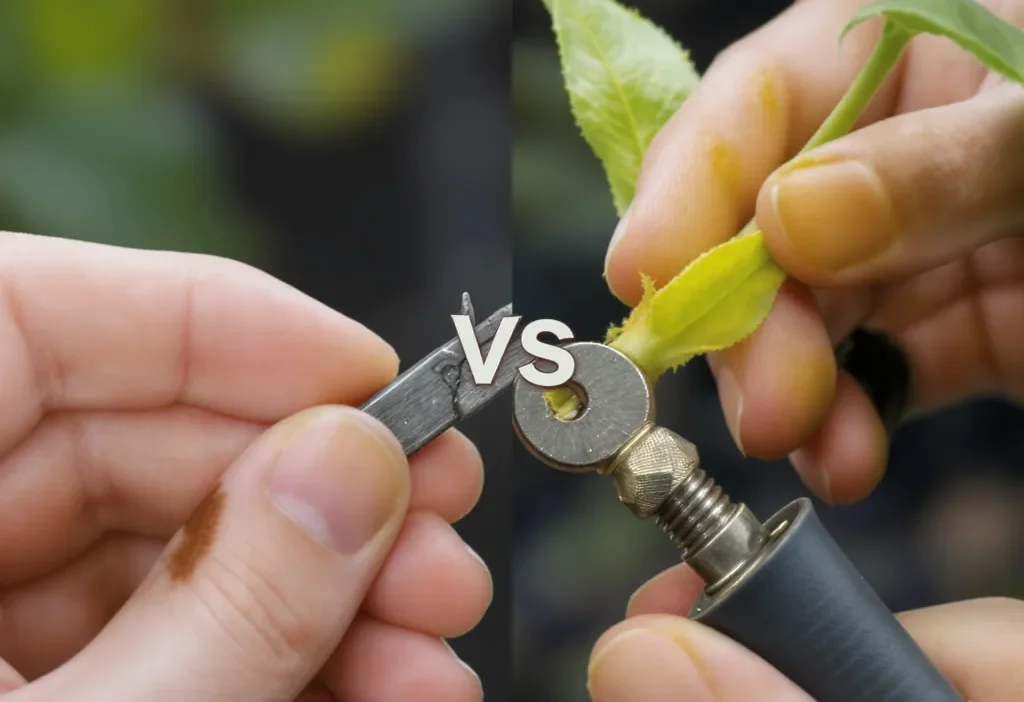
At its heart, the choice between these two vegetative propagation methods comes down to what you’re physically moving from one plant to another. This fundamental difference dictates everything from timing to technique.
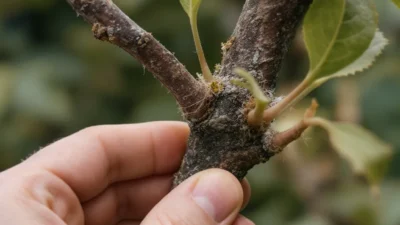
Grafting involves joining a scion—a short length of stem that carries multiple buds—onto the rootstock of another plant. You’re essentially transplanting an entire shoot tip. The goal is for the vascular tissues (the cambium layers) of both pieces to fuse, creating one continuous plant. It’s a more substantial union, often used to build or repair the main framework of a tree.
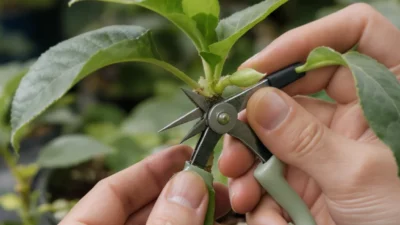
Budding, in contrast, is a more minimalist approach. It transfers just a single bud, along with a small sliver of bark and wood, into an incision on the rootstock. That one bud is responsible for generating an entire new branch or, if placed correctly, the whole top of the plant. It’s a surgery of precision rather than bulk.
Think of it like this: grafting is swapping out an entire engine, while budding is installing a new, powerful microchip. For a deeper dive into the principles of plant propagation, resources like university extension services, such as this guide from the University of Minnesota Extension, offer excellent foundational knowledge.
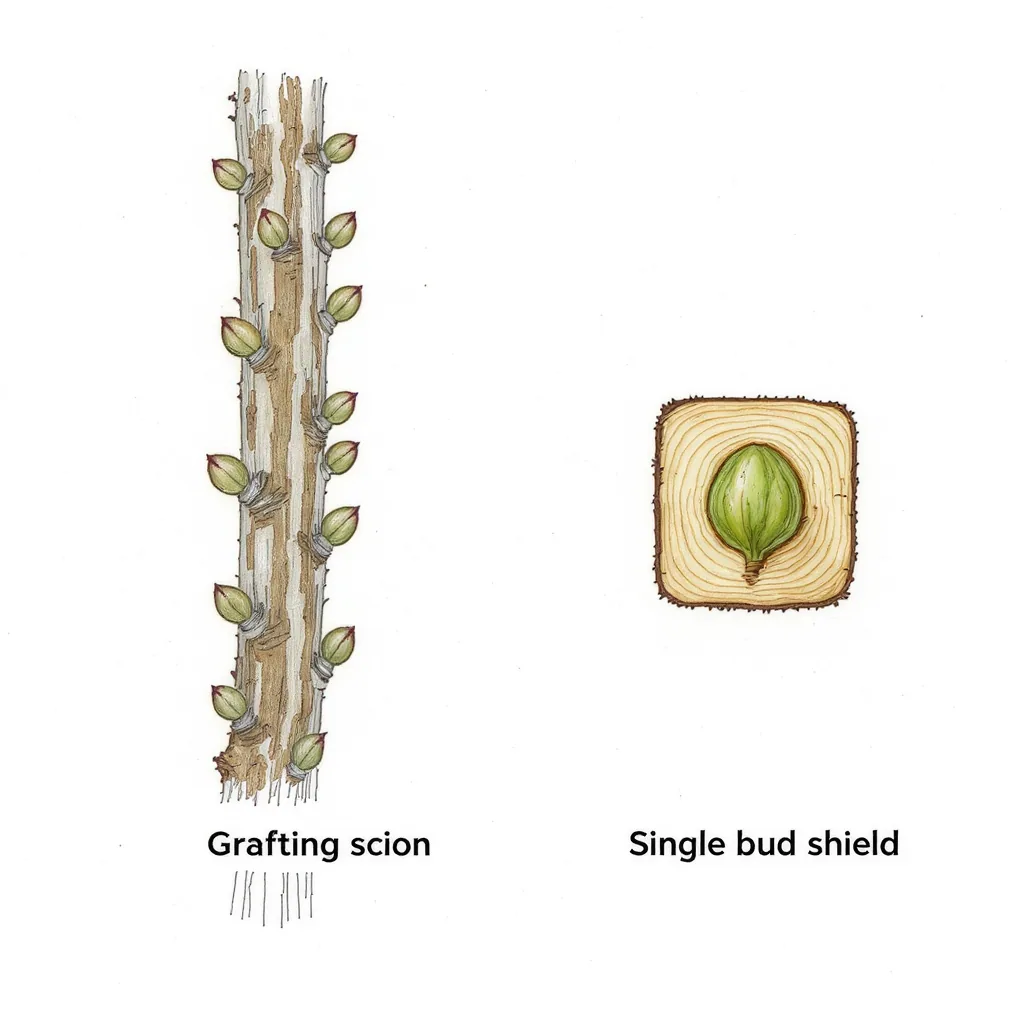
Side-by-Side: Grafting vs Budding at a Glance
This quick-reference table breaks down the key practical differences to help you scan and compare these propagation methods at a glance.
| Factor | Grafting | Budding |
|---|---|---|
| Plant Part Used | Scion (stem piece with multiple buds) | Single bud with a shield of bark |
| Best Season | Late winter to early spring (dormant season) | Late summer (active growth, bark “slipping”) |
| Skill Level | Moderate to high; requires precise cambium alignment | Beginner to moderate; relies on a clean bud insertion |
| Speed of Union | Slower; takes a full season to show strong growth | Faster; the bud may remain dormant until spring, then grows vigorously |
| Common Uses | Creating new standard trees, top-working old trees, repairing damage, combining varieties on one rootstock | Mass propagation of roses, citrus, and ornamentals; adding a new variety to an existing branch |
| Best For (Examples) | Apple, pear, cherry, plum, walnut, and many shade trees | Roses, peaches, citrus, maples, and thin-barked plants |
Your Decision Guide: When to Choose Which Method
Instead of memorizing rules, walk through these key decision points. Your answers will naturally lead you to the better technique for your project.
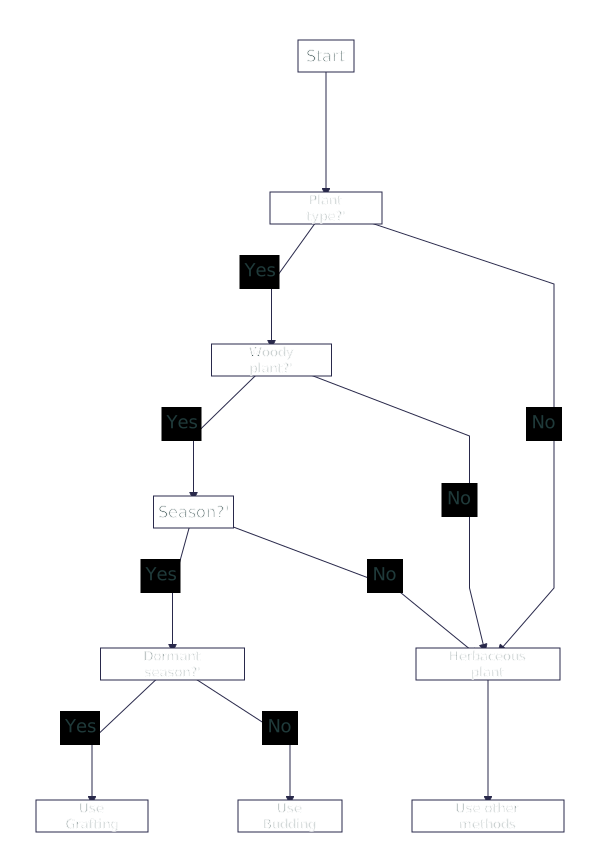
1. What Type of Plant Are You Propagating?
- Choose Grafting for: Most deciduous fruit trees (apples, pears, stone fruits), nut trees, and when creating a new “standard” tree with a distinct trunk. It’s the go-to for joining wood of similar diameter.
- Choose Budding for: Roses, citrus trees, peaches, and many ornamental trees and shrubs with thin, pliable bark. It’s the standard for commercial rose production.
2. What Time of Year Is It?
- Grafting Season: Late winter, just before spring growth begins. The scion must be fully dormant, and the rootstock is often dormant or just starting to stir. This timing is critical for a successful propagation method comparison.
- Budding Season: Mid to late summer, when the bark separates easily from the wood (called “slipping”). The rootstock is in active growth, providing the sap flow needed to heal around the inserted bud.
3. What Is Your Skill Level and Goal?
- If you’re a beginner, T-budding is often easier to master than complex grafting unions like the whip-and-tongue. The smaller wound can heal more reliably.
- If your goal is to completely change the variety of an established tree (“top-working”), grafting multiple scions is the typical approach.
- For mass-producing many plants from a single prized variety, budding is usually more efficient and economical.
Getting Started: A Quick Protocol for Each
Here’s the gist of each process to illustrate the complexity. Remember, sharp, sterile tools and precise cuts are non-negotiable for success in either method.
The Gist of Whip-and-Tongue Grafting
- Prepare the Stock and Scion: Cut the rootstock and a matching-diameter scion (with 3-4 buds) with identical, long sloping cuts.
- Create the “Tongue”: Make a downward notch in the rootstock cut and an upward notch in the scion cut so they interlock.
- Join and Secure: Fit the tongues together, ensuring the cambium layers (the greenish layer just under the bark) align on at least one side. Wrap tightly with grafting tape.
- Protect: Seal all cut surfaces with grafting wax or compound to prevent drying.
The Gist of T-Budding
- Prepare the Bud: Slice a shield-shaped piece of bark from the donor wood, centered on a healthy, plump bud.
- Make the “T” Incision: On the rootstock, make a vertical cut about an inch long through the bark, then a horizontal cut at the top to form a “T.” Gently lift the bark flaps.
- Insert the Bud: Slide the bud shield down into the T-incision until the bud sits just below the horizontal cut.
- Wrap: Secure with budding rubber or tape, leaving the bud itself exposed. The wrap will degrade naturally.
For detailed, step-by-step tutorials with photos, seek out guides from reputable horticultural institutions.
Make Your Cut With Confidence
Understanding the core difference between moving a scion and moving a single bud transforms this from a mystery into a logical choice. Your plant and the calendar are your best guides. For that dormant fruit tree needing a new start, grafting is your foundational technique. For the rose bush in full summer leaf, budding offers a precise and efficient solution.
So, grab your pruning shears and look at your plant. If it’s a sturdy, dormant fruit tree, order some compatible rootstock and practice your grafting cuts. If it’s a rose bush in full leaf, find a healthy bud and prepare for summer budding. The right method makes all the difference.