If you’ve ever lost a promising propagation to rot or despair, you might blame your technique or your “black thumb.” But here’s the counterintuitive truth: the biggest mistake in plant propagation isn’t killing cuttings—it’s using the wrong method from the start. Treating offsets vs cuttings propagation as interchangeable options is like using a screwdriver to hammer a nail; it might eventually work, but it’s fighting the natural design. In reality, these are two distinct tools, each perfectly suited to a specific plant “personality” and growth blueprint. Understanding this fundamental difference is the key to moving from hopeful snipping to confident, successful cloning of your favorite houseplants.
The best way to choose between offsets and cuttings for houseplants is to look at your plant’s growth habit. Use offsets (pups) for plants like succulents, spider plants, or bromeliads that naturally produce clones at their base or on runners. Use stem or leaf cuttings for vining plants, woody stems, or plants that don’t produce pups. Offsets are a ready-made package, while cuttings require you to create a new root system.
The Great Plant Propagation Myth: They’re Basically the Same
Let’s start by clearing up the biggest misconception in vegetative propagation: offsets and cuttings are not interchangeable terms. Using them as if they are is like trying to use a screwdriver to hammer a nail—it might work in a pinch, but it’s the wrong tool for the job and often leads to frustration.
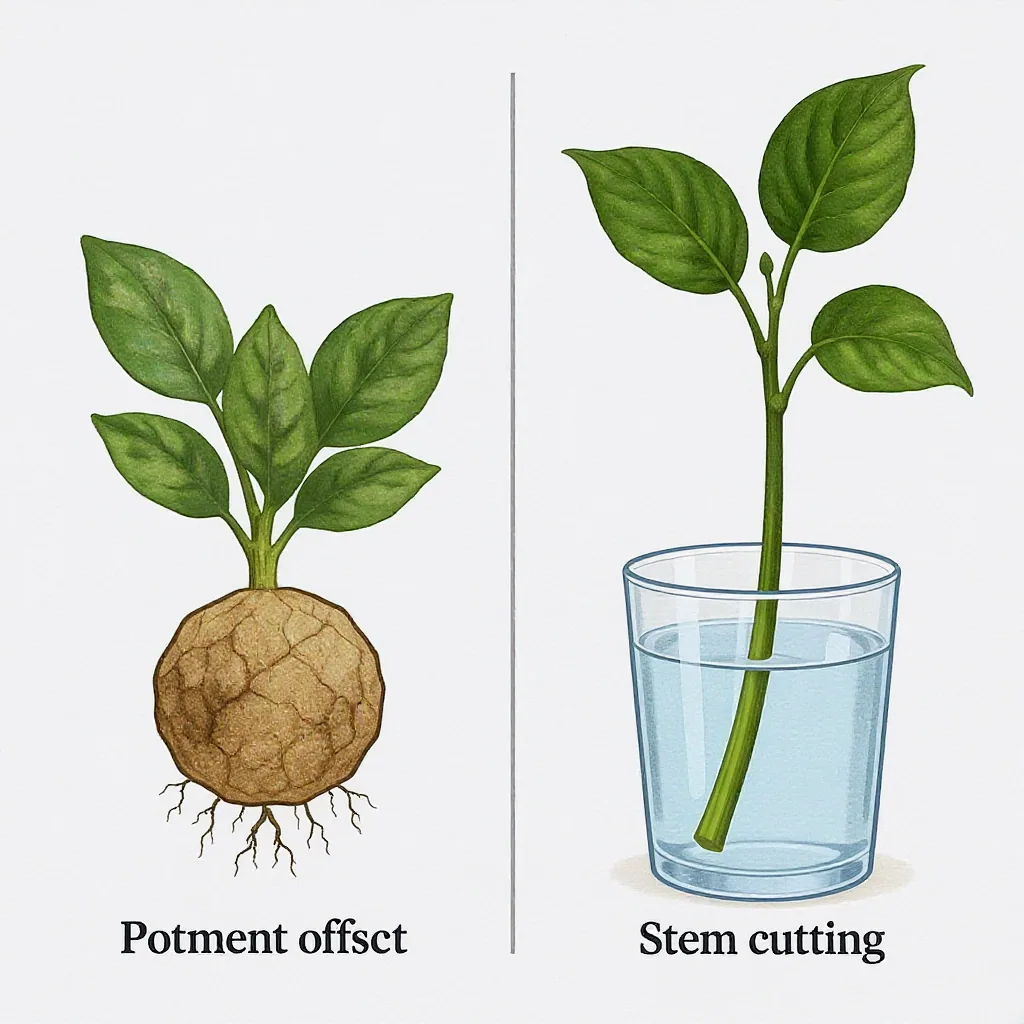
An offset (often called a “pup” or “baby”) is a genetically identical plantlet that the mother plant produces on its own. It’s a complete mini-plant, often with its own starter roots, that grows from the base, on a runner (stolon), or even from the leaf of the parent. Think of it as the plant handing you a ready-to-pot clone.
A cutting, on the other hand, is a segment you actively remove from a parent plant—a piece of stem, a leaf, or a section of root. Its job isn’t done; you must encourage it to develop a new root system and, in the case of a leaf, often an entirely new plant. This is a human-directed intervention that exploits the plant’s ability to heal and regenerate.
Your Plant’s Blueprint: How Growth Habit Dictates the Method
The choice between houseplant pups propagation and taking plant cuttings isn’t really a choice you make. It’s dictated by your plant’s innate biology. Some plants have evolved to spread by creating clones (offsets). Trying to propagate a spider plant from a random leaf cutting, for example, is typically futile because that’s not how it’s built to reproduce asexually.
Offsets are a plant’s built-in cloning houseplants strategy. The mother plant invests energy to create a nearly independent offspring, complete with meristematic tissue (growth cells) arranged to form roots, stems, and leaves. When you separate an offset, you’re simply finalizing a process nature already started.
Cuttings work because of a plant’s wound-response mechanism. When you make a clean cut, the plant cells at the site can differentiate to form new roots (adventitious roots). This is why a node—a bump on a stem where leaves emerge—is crucial for stem cuttings; it’s packed with latent cells ready to become roots. The method is powerful and versatile, but it requires you to create the conditions for that new growth to happen.
The Offset Advantage: When Nature Does the Hard Work
If your plant produces offsets, this is almost always the best and easiest path. The success rate is high, establishment is fast, and you get a perfectly formed miniature of the parent. Your main role is recognizing the pup and knowing when and how to separate it.
Ideal Plants for Offset Propagation:
- Succulents & Cacti: Like Aloe, Haworthia, Sempervivum (Hen and Chicks), and Echeveria. They produce pups at their base.
- Spider Plant (Chlorophytum comosum): The classic example, producing plantlets on long runners.
- Bromeliads (like Aechmea or Guzmania): The mother plant flowers once, then produces pups at its base before dying.
- Snake Plant (Sansevieria): Propagated by dividing the rhizome (an underground stem) and the pups that shoot up from it.
- Pilea Peperomioides (Chinese Money Plant): Sends up pups from the soil or stem.
- Ponytail Palm (Beaucarnea recurvata): Often produces offsets at its bulbous base.
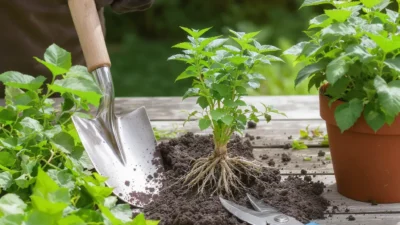
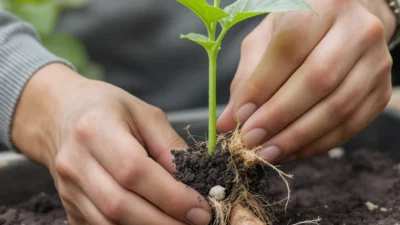
The technique is simple: wait until the pup is about one-third the size of the mother plant. For soil-based pups, gently unpot the plant and tease the roots apart, ensuring the offset has its own root system. For runners, simply snip the connecting stolon. You can learn more about specific separation techniques from resources like the University of Minnesota Extension’s guide on houseplant propagation.
The Cutting Crew: For the Vines, Stems, and Leafy Adventurers
For plants that don’t produce pups, cuttings are your gateway to endless new plants. This method gives you creative control, allowing you to shape a parent plant while turning trimmings into new life. The core requirement is providing the right environment (often moisture and warmth) for roots to form.
Ideal Plants for Cutting Propagation:
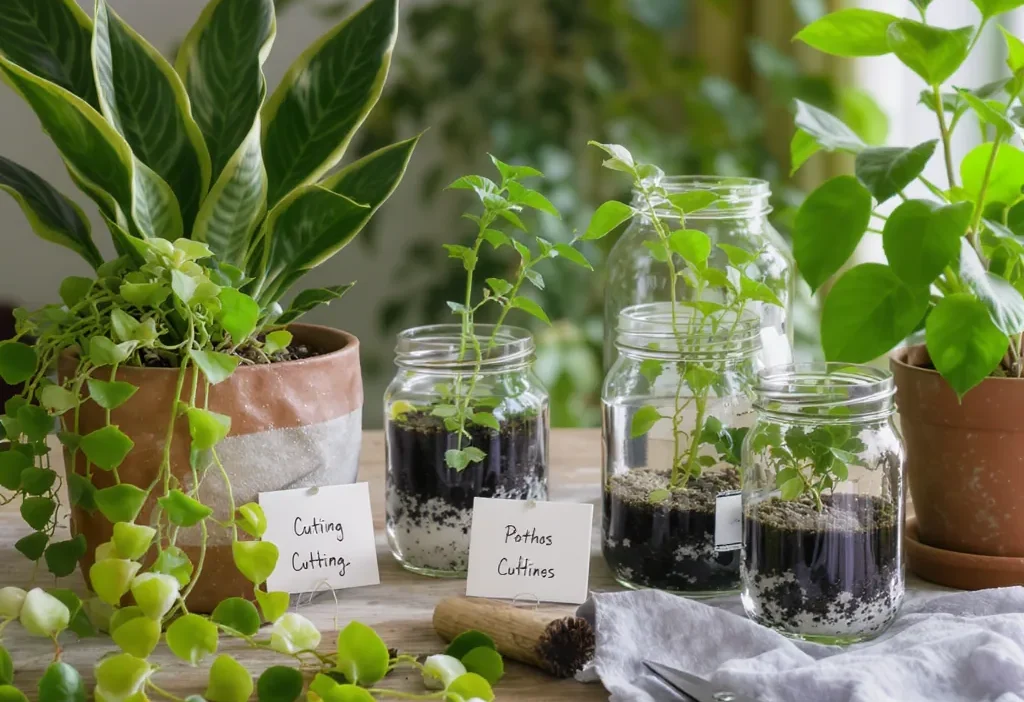
- Vining Plants: Pothos, Philodendron, Monstera adansonii. Use stem tip cuttings with at least one node.
- Woody-Stemmed Plants: Fiddle Leaf Fig, Rosemary. Use stem cuttings, sometimes with the aid of rooting hormone.
- Soft-Stemmed Plants: Tradescantia (Wandering Dude), Coleus. These root incredibly fast in water or soil.
- Herbs: Mint, Basil, Sage. Propagate from stem cuttings for a continuous supply.
- Leaf-Propagation Specialists: African Violets (leaf petiole), Peperomia (leaf or stem), some Begonias.
The key difference in the plant babies vs cuttings debate here is that a cutting is not a baby yet—it’s a project. You must place the node in water or moist soil and maintain humidity. While offsets are a sure bet, cuttings offer the joy of watching roots develop and the ability to create many plants from a single source.
Your Decision Matrix: 3 Questions to Ask Before You Snip
Forget memorizing lists. When you’re eyeing a plant you want to multiply, ask yourself these three simple questions. They will guide you to the correct method every time.
1. Does my plant have obvious pups, plantlets, or runners? Look for miniature versions of the plant attached at the base, on a long shoot, or on the leaf. If you see them, your path is clear: propagate via offsets. Nature has done the hard work.
2. Am I looking at a long vine or a stem I can trim? If there are no pups, but your plant has lengthy growth, you’re in cutting territory. Identify a healthy section with nodes, and you’re ready to go.
3. Is my goal a single, stable new plant or multiple projects? Offsets give you one solid new plant per pup. A single vine, however, can be cut into multiple segments, each potentially becoming a new plant. Cuttings are for abundance.
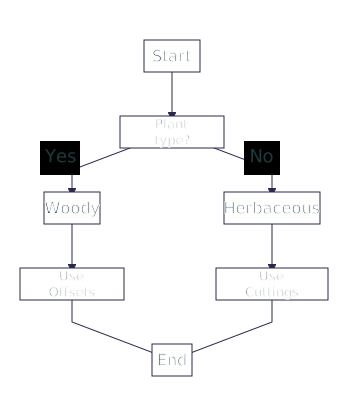
This diagnostic approach is educational and helps you learn your plant’s language. For definitive guidance on rare species, always cross-reference with specific plant care resources.
Choosing Your Propagation Path
The real skill in asexual plant propagation isn’t just in the snipping or separating; it’s in the observation. By understanding that offsets are a pre-packaged gift from the plant and cuttings are a collaborative project you initiate, you can match your actions to your plant’s natural design.
The tradeoff is clear: offsets offer ease and a near-guarantee for the plants built to produce them. Cuttings offer flexibility, creativity, and volume for a wider range of species. There’s no “better” method overall—only the right method for your specific plant. So next time you’re ready to expand your indoor jungle, take a moment to read the blueprint. Your plant will tell you exactly how it wants to be propagated.