You’ve probably heard the myth: plant propagation is a complex science reserved for experts with sterile labs and greenhouses. This intimidating idea often stems not from the process itself, which is beautifully simple, but from the wall of confusing terminology that seems to guard it. The truth is, propagation is simply guiding a plant’s natural ability to create new life, a fundamental skill that becomes instantly accessible once you translate the jargon. This guide to plant propagation basics and terminology will dismantle that barrier, replacing confusion with clarity so you can see every leaf, stem, and node on your favorite plants not just as parts, but as potential for new growth.
What is the best way to understand plant propagation? Start by grasping its two fundamental categories: sexual (using seeds) and asexual (using plant parts like cuttings). Mastering this core distinction, along with key terms like ‘node,’ ‘rooting hormone,’ and ‘medium,’ demystifies all the techniques. It’s less about having a green thumb and more about understanding a plant’s natural ability to regenerate, which you can easily guide with a solid foundation in plant propagation basics and terminology.
Myth vs. Fact: Untangling the Jargon Jungle
Before we dive into definitions, let’s clear the air. Confusing terms often create intimidating myths that stop beginners before they even get their hands dirty. By reframing these myths as facts, you’ll build the right mental model from the start.
Common Myths That Stem from Confusing Terms
Myth 1: “Plant propagation is just making cuttings.”
This is the most common oversimplification. While stem cuttings are a popular method, they are just one branch of a much larger tree. Propagation encompasses everything from sowing a tomato seed to dividing a hosta, each with its own specific terminology and purpose. Thinking it’s only about cuttings limits your gardening potential.
Myth 2: “Seeds are the only ‘natural’ or ‘proper’ way to propagate.”
This myth confuses “natural” with “sexual reproduction.” In nature, plants reproduce both sexually (via seeds) and asexually (via runners, fallen stems that root, etc.). Asexual propagation techniques like layering or division simply mimic these natural processes. One method isn’t more “correct” than the other; they are tools for different goals.
Myth 3: “You need expensive hormones, special labs, or a greenhouse to succeed.”
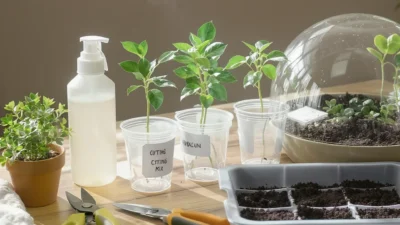
Specialized tools can help in commercial settings, but the core principle of propagation is harnessing a plant’s innate ability to regenerate. Many plants root readily in a glass of water on a windowsill. The real keys are understanding basic plant biology and providing the right environment, not owning fancy equipment.
Your First Practical Takeaways
With those myths busted, here are your first actionable insights:
- Start with what you have: An overgrown pothos or spider plant “pup” is a perfect, low-risk first project.
- Observation is your best tool: Notice where new growth emerges on your plant (at nodes). That’s where the magic happens.
- Cleanliness matters more than cost: A sharp, clean knife prevents disease, which is more valuable than any rooting powder.
- Patience is non-negotiable: Roots develop on their own schedule, not yours. Check less, trust more.
The Core Dichotomy: Sexual vs. Asexual Propagation
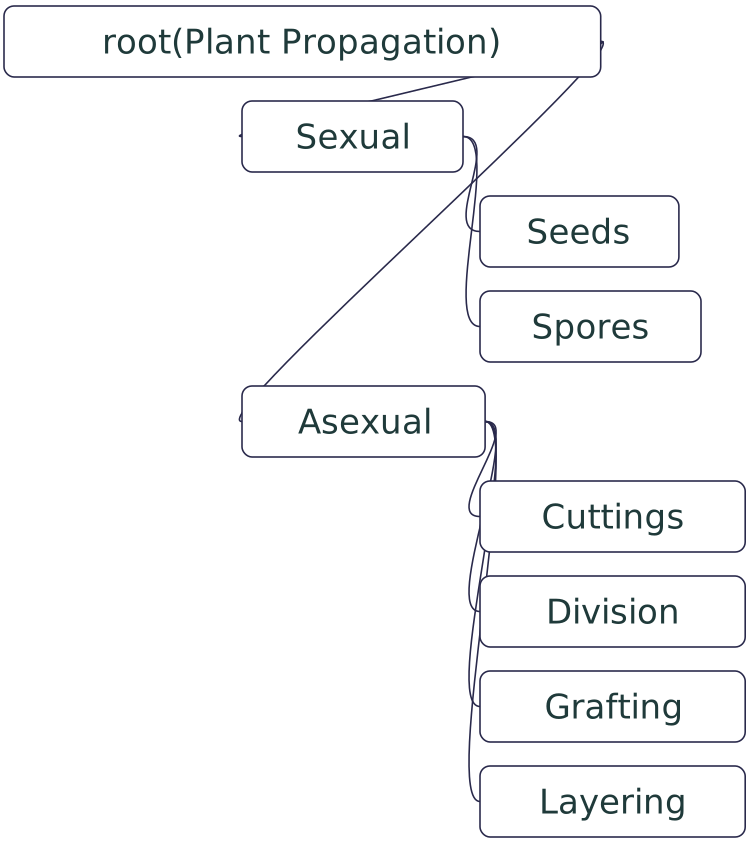
Every single propagation method falls into one of two fundamental categories: sexual or asexual. Grasping this split is the master key that unlocks the logic behind all the techniques. This is a biological distinction, not a value judgment on which method is better—each has its perfect use case.
Sexual Propagation involves seeds and the fusion of genetic material from two parent plants (via pollination). The resulting seedling is a unique genetic individual, similar to how human siblings differ. This method is essential for breeding new varieties and is common for annuals, biennials, and many vegetables. The process relies on the flower’s journey from pollination to fertilization to seed formation. You can learn more about this fascinating biological process from resources like the University of Minnesota Extension’s guide to seed propagation.
Asexual (Vegetative) Propagation uses a part of an existing plant—a stem, leaf, root, or bud—to create a new one. The new plant is a genetic clone, identical to its parent. This is how you perfectly replicate your favorite rose, your grandmother’s heirloom geranium, or a prized variegated monstera. The science behind this is totipotency: the ability of a single plant cell to regenerate into a whole new plant. This isn’t magic; it’s cellular potential waiting for the right signals.
Your A-to-Z Guide to Essential Propagation Terms
Now, let’s translate the lexicon. This isn’t an exhaustive dictionary, but a focused guide to the terms you’ll actually encounter. Think of this as your cheat sheet for any plant propagation guide you read.
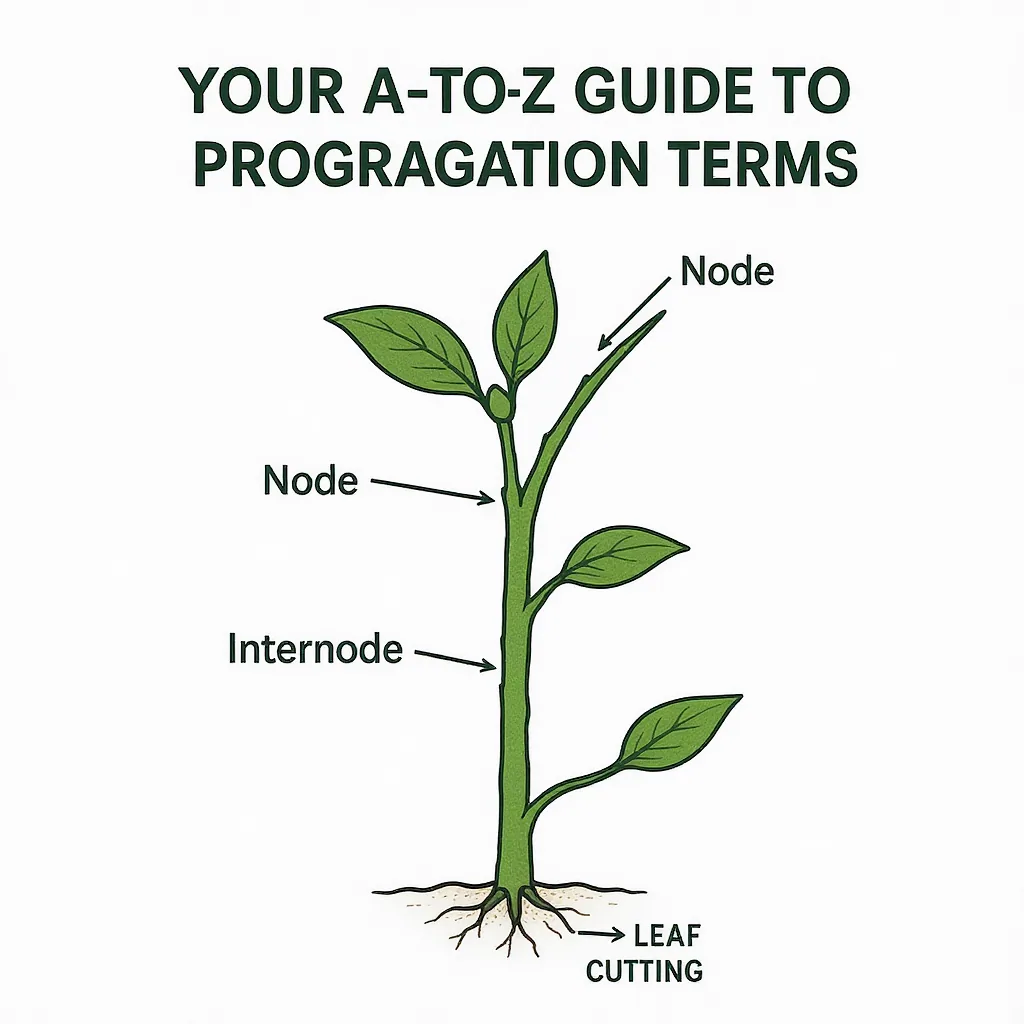
Plant Part Terms
Node: The critical point on a stem where leaves, buds, and branching shoots originate. This is the growth hub where roots most readily form. Why it matters: Cuts are always made just below a node.
Internode: The stem segment between two nodes. Why it matters: Roots rarely form from internodes, so avoid placing this section under your propagation medium.
Cutting: A section of a plant (stem, leaf, or root) removed for the purpose of propagation. It’s categorized by the part used: Stem Cutting, Leaf Cutting, Root Cutting.
Scion & Rootstock: Terms used in grafting. The scion is the chosen shoot or bud with the desired fruit or flower traits. The rootstock is the established root system (and sometimes lower stem) onto which the scion is attached, often chosen for hardiness or size control.
Offset / Pup: A complete, miniature plant that grows naturally from the base or side of the parent (e.g., spider plants, aloe, many succulents). It’s already a self-contained clone ready for separation.
Runner / Stolon: A horizontal stem that grows along the ground (or just below it) and forms new plantlets at its nodes (e.g., strawberries, spider plants).
Process & Method Terms
Grafting: The horticultural technique of joining the tissues of two plants so they grow as one. It combines the strengths of the scion and rootstock.
Layering: A method where a stem is encouraged to root while still attached to the mother plant. Once rooted, it’s severed to become independent. It’s a low-risk, high-success technique.
Division: The physical splitting of a mature plant’s root mass and crown into two or more separate plants. Ideal for clump-forming perennials like hostas and ornamental grasses.
Rooting Hormone: A powder, gel, or liquid containing growth regulators (often auxins) that stimulate root cell development on cuttings. It’s a helpful boost but not always strictly necessary.
Callus: The protective layer of undifferentiated cells that forms over a wound on a plant cutting. For some plants (like many succulents), you must let a callus form before attempting to root to prevent rot.
Damping Off: A fatal fungal disease that attacks seedlings and cuttings at the soil line, causing them to collapse. It’s often a result of overly wet, cool, and poorly ventilated conditions.
Medium & Environment Terms
Medium (plural: Media): The material in which cuttings are placed to root or seeds are sown. It’s not just “dirt.” Common options include water, perlite, vermiculite, coarse sand, sphagnum moss, or sterile seed-starting mix. The medium provides support, moisture, and often air.
You might find yourself browsing a forum where someone says, “My monstera node cutting callused over, but it’s just sitting in perlite and hasn’t pushed any roots yet.” With this terminology guide, that sentence is no longer confusing—it’s a clear status report. You understand they took a cutting at a growth point, let the wound heal, and are using an airy, sterile medium to encourage root growth, which simply requires more time.
From Terms to Technique: A Simple Decision Scenario
Let’s apply your new vocabulary. Imagine you have two propagation opportunities: 1) A sprawling spider plant spilling over its pot, and 2) A beautiful 6-inch stem tip from a friend’s rare, non-patented rose bush.
For the spider plant, you see it’s producing long stems with little plantlets at the nodes—those are runners ending in offsets (pups). The simplest method here is to either peg a runner’s node into a pot of soil while it’s still attached (layering) or simply snip off a well-developed pup, ensuring it has some nascent roots, and pot it up. Division is also possible if the main clump is large. The terminology directly points you to the easiest, most natural plant propagation methods for this species.
For the rose stem, it’s a cutting. You’ll identify a healthy node near the base of the stem and make a clean cut just below it. You might dip the end in rooting hormone to encourage growth before placing it in a well-draining medium like a perlite-peat mix. You’re guiding the plant’s totipotent cells at the node to become roots instead of a leaf bud. The terms frame your entire action plan.
Beyond the Basics: What the Terms Don’t Tell You (But You Should Know)
A glossary gives you the words, but wisdom comes from understanding the context they operate in. Here are the unspoken rules that bridge terminology to consistent success.
The Critical Role of Environment
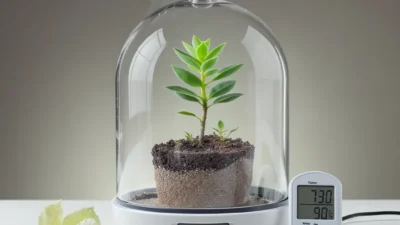
You can execute a perfect cutting technique, but if the environment is wrong, failure is likely. Humidity is paramount for leafy cuttings to prevent water loss before roots form (a clear plastic bag or dome often works). Light should be bright but indirect—think of a shaded spot, not a dark corner or direct sun that cooks delicate tissues. Temperature needs to be warm enough to encourage cellular activity; a chilly windowsill in winter can stall everything.
Sanitation: The Invisible Foundation
This is the single most overlooked step by beginners. A dirty blade introduces bacteria and fungi directly into the plant’s vascular system. Always wipe tools with isopropyl alcohol or a diluted bleach solution between cuts, especially when moving between plants.
Reading Plant Cues and Timing
Propagation isn’t a calendar-based hobby. It’s about reading the plant’s state of growth. Take cuttings from vigorous, healthy stems during a period of active growth (usually spring or early summer), not when the plant is stressed, flowering heavily, or dormant. The plant’s own energy is your greatest ally.
Three Mindset Shifts for Success
- Embrace Experimentation: Not every cutting will root. View losses as data points, not failures. Did it rot? Maybe the medium was too wet. Did it dry out? Humidity was likely too low.
- Prioritize Observation Over Intervention: Constantly pulling up a cutting to “check for roots” breaks the delicate root hairs that are forming. Set it up correctly, then mostly leave it alone.
- Start with “Weedy” Confidence Builders: Practice your propagation terms for beginners on easy, fast-rooting plants like pothos, mint, or coleus. Success here builds the confidence to tackle slower, more valuable plants later.
Seeing Your Garden with New Eyes
You now possess the foundational map. The journey from feeling overwhelmed by propagation terms for beginners to understanding the logical framework behind them is the most significant step you can take. This isn’t about memorizing a rigid list of rules, but about learning a new language that describes life itself—a plant’s inherent drive to grow and multiply.
With the core dichotomy of sexual versus asexual propagation clear and a practical vocabulary in hand, you can approach any plant, online tutorial, or gardening book with confidence. You’re no longer just following steps; you’re understanding the “why” behind them. So, look at your houseplants and garden not as static decorations, but as boundless sources of new life. Every node is potential. Every offset is a gift. Go ahead, make that first cut, sow that seed, and guide a little piece of nature through its next chapter. You’ve got this.
This guide demystifies plant propagation by first busting common jargon-based myths and then building a clear, logical foundation. The key takeaways are:
- All methods fit two categories: Sexual (from seeds, creating genetic variation) and Asexual/Vegetative (from plant parts, creating genetic clones via totipotency).
- Master a handful of essential terms: Understanding words like node, cutting, medium, rooting hormone, and division unlocks instructions for any technique.
- Terminology guides practical choice: The plant itself (e.g., producing offsets vs. a single stem) points to the logical method, from simple layering to more involved grafting.
- Success lies beyond the glossary: The unspoken fundamentals—sanitation, humidity, patience, and observation—are often more critical than the specific technique used.
Ultimately, propagation is a learnable skill of guiding a plant’s natural regenerative abilities, not a complex science reserved for experts.