If you’ve ever watched a cutting sit stubbornly in its humidity dome for weeks without a single root to show for it, you’re not alone. Most of us instinctively reach for the plastic cover, believing moisture in the air is the magic key. But the real secret to fast, healthy propagation lies in a factor you can’t see: consistent warmth. Understanding the plant physiology behind rooting reveals a clear hierarchy of needs. While humidity gets all the attention, it’s actually the supportive player. The non-negotiable trigger for cellular activity and root formation is stable, gentle heat at the cutting’s base. Let’s unpack the science of your propagation environment to settle the debate between warmth vs humidity for propagation once and for all.
The best way to think about warmth vs humidity for propagation is to prioritize stable root-zone warmth first. Warmth directly fuels the cellular activity needed for root formation. High humidity is a secondary support system that prevents cuttings from drying out before those new roots can function. Start by ensuring consistent bottom heat, then add humidity to reduce stress.
The Root of the Matter: What a Cutting Actually Needs
To understand the debate of propagation temperature vs humidity, you need to see the world from the cutting’s perspective. A freshly taken cutting is a wounded piece of plant with no roots. Its sole mission is survival, and that means growing new roots as fast as possible to replace the water and nutrients it can no longer draw from the parent plant.
This process of root formation is fundamentally biological. It requires stored energy (carbohydrates) and intense cellular activity—specifically, cell division to form a protective callus and then the delicate root initials. This cellular machinery, like all metabolic processes in plants, is highly sensitive to temperature. In cool conditions, this activity slows to a crawl or stops. In consistently warm conditions, it accelerates. This is the core of rooting environment basics: warmth powers the engine of growth.
Humidity plays a role, but it’s a supporting one. A cutting has no functioning roots to take up water, yet it still loses moisture through its stems and any remaining leaves (transpiration). High humidity around the cutting reduces this water loss, essentially buying time for the warmth-fueled root growth to happen. It’s a protective shield, not the driver of the process itself.
Warmth: The Silent Engine of Root Growth
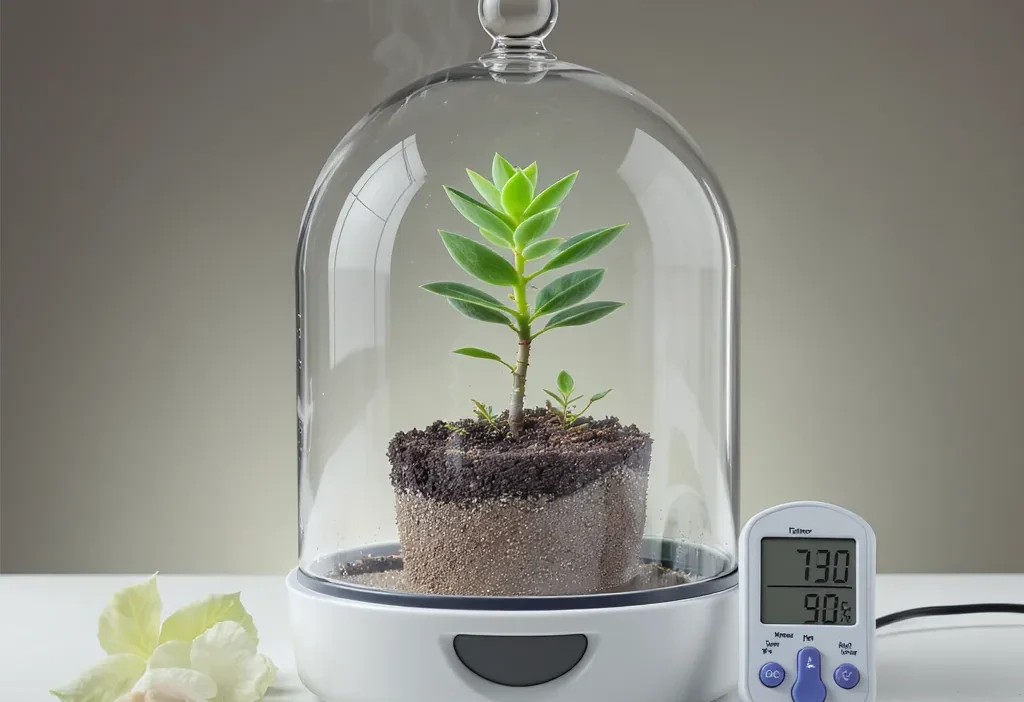
When we talk about warmth for propagation, we’re not just talking about a warm room. The most critical factor is the temperature of the rooting medium itself—the soil, water, or perlite surrounding the stem. This is often called “bottom heat,” and it’s why a dedicated propagation heat mat is so effective. It delivers consistent, gentle warmth directly to the zone where you need cellular activity to explode: the base of the cutting.
The ideal propagation temperature range for most common houseplants and garden varieties is between 70-75°F (21-24°C). Within this “Goldilocks zone,” enzymatic activity is optimized, encouraging rapid callusing and root cell division. Ambient air warmth is helpful, but a warm room with a cold windowsill or a pot of chilly soil won’t cut it. The cutting’s “feet” need to be cozy. This principle explains why a setup with a heat mat and no dome will often outperform a dome on a cold surface—the engine is running.
This direct link between warmth and metabolic rate is why it’s the non-negotiable first priority. You are providing the fundamental energy for the biological process to even begin. Without it, the cutting is in stasis, merely surviving until conditions improve or it depletes its reserves and dies.
Humidity: The Protective Shield (Not the Driver)
This is where a common misconception lives. Many propagators see a humidity dome as the primary tool for success, believing it somehow “feeds” moisture to the plant or actively stimulates rooting. In reality, high humidity is a damage-control system. Its job is to drastically slow the rate of water loss from the cutting’s tissues, preventing it from wilting and dying before those new, warmth-powered roots can form and become functional.
Think of it this way: if warmth is the engine, humidity is the cooling system. An engine can’t run without fuel (warmth-activated metabolism), but it will overheat and seize without a cooling system (humidity preventing fatal dehydration). This clarifies the propagation temperature vs humidity relationship: one starts the process, the other preserves the cutting long enough for the process to finish.
It’s also possible to have too much of a good thing. Excessive, stagnant humidity with poor air circulation is a recipe for fungal diseases like damping off or stem rot. The goal is to maintain high humidity, not to create a sealed, soggy terrarium. This is why many experienced propagators recommend occasionally venting domes or using ones with adjustable vents.
Practical Scenarios: Applying the Warmth-First Principle
Let’s apply this theory to real-world situations to see how the warmth-first principle dictates outcomes. These comparisons will help you diagnose your own propagation environment priorities.
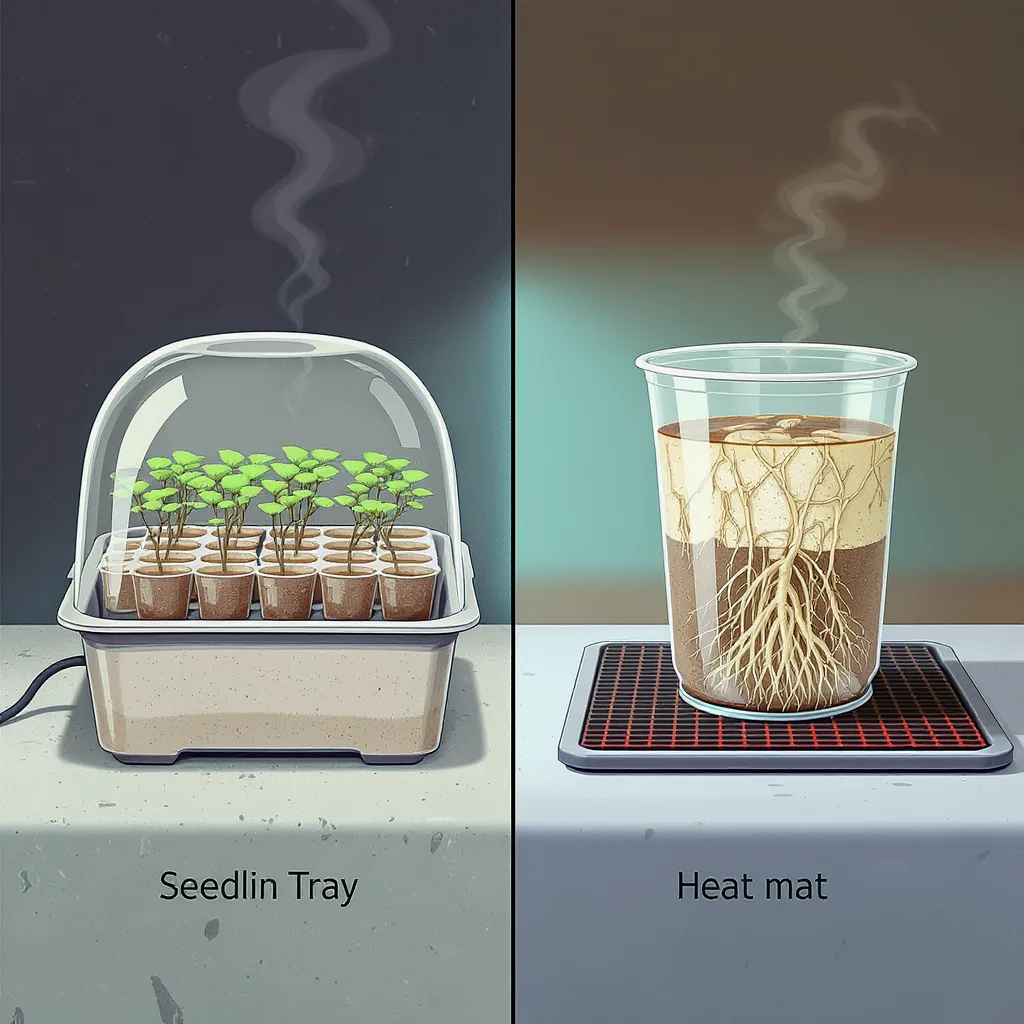
Scenario A: Warm Room, No Dome vs. Cool Room, With Dome
You have two identical pothos cuttings. One is in a cup of water on a kitchen counter in a 75°F home (no dome). The other is under a humidity dome on a 65°F basement floor. Which will root faster? The cutting in the warm room almost always wins. Even with slightly higher water loss, its metabolic activity is high, driving rapid root development. The domed cutting in the cool room is preserved in a hydrated state but is essentially in suspended animation, waiting for warmth to trigger growth.
Scenario B: Heat Mat vs. Humidity Dome (The Budget Choice)
If you can only invest in one tool for improving your optimal propagation climate, a heat mat is typically the more impactful choice. It addresses the core need. You can create a makeshift humidity tent with a plastic bag to mitigate water loss, but it’s much harder to artificially and consistently warm your rooting medium without a dedicated heat source.
A quick, important note: This is an educational framework. Some plants, like succulents, have very low humidity tolerance, while high-humidity tropicals may demand it. Always research specific needs, but use the warmth-first principle as your foundational guide.
Common Mistakes to Avoid
Most propagation errors stem from misunderstanding the roles of warmth and humidity. Here are the top pitfalls:
- Misting as a substitute for stable humidity: Frequent misting creates short bursts of high humidity followed by rapid drying, causing stress. It also wets the foliage, which can encourage disease. A dome or cloche provides a consistently humid microclimate without the fluctuations.
- The doomed dome on a cold windowsill: This combines the worst of both worlds: a cold root zone that halts growth, trapped with high humidity that encourages rot. It’s the perfect environment for failure.
- Assuming “more humidity is always better”: Sealing a dome 24/7 with no air flow invites fungal growth. The goal is balanced support. Once cuttings are callused or show root growth, gradually reducing humidity (venting the dome) helps acclimate them to normal room conditions and strengthens new growth.
Mastering the Balance for Propagation Success
The journey of rooting a cutting isn’t a mystery when you understand the underlying biology. In the partnership of warmth and humidity, warmth is the senior partner—the fundamental trigger without which the process stalls. Humidity is the invaluable junior partner, managing risk and preserving the cutting’s resources.
The most successful propagators internalize this hierarchy. They focus first on providing consistent, gentle bottom heat to power cellular growth. Then, they add humidity judiciously as a support system, using it to reduce stress without creating new problems. By prioritizing the engine over the cooling system, you create an environment where cuttings don’t just survive—they thrive and root with vigor.
Q: Can I propagate without a humidity dome?
A: Absolutely, especially if you can provide adequate warmth and monitor your cuttings. Many plants, particularly those with succulent leaves or woody stems, root perfectly well in open air or water on a warm windowsill. The dome is a tool to reduce water loss and frequency of watering, not a strict requirement for all propagation.
Q: What temperature is too hot for propagation?
A: Temperatures consistently above 85°F (29°C) can become detrimental. Excessive heat can cook delicate root cells, increase water loss too rapidly, and promote harmful bacterial growth in the medium. The sweet spot for most plants is 70-75°F. If using a heat mat, always use a thermostat to prevent overheating.
Q: My cuttings are in a humid dome but not rooting. What’s wrong?
A: This classic symptom points directly to insufficient warmth. Your cuttings are being preserved by the humidity but lack the thermal energy needed to initiate root growth. Check the temperature of your rooting medium. Is it on a cold surface? Moving the setup to a warmer location or adding a heat mat beneath it will likely solve the problem.